
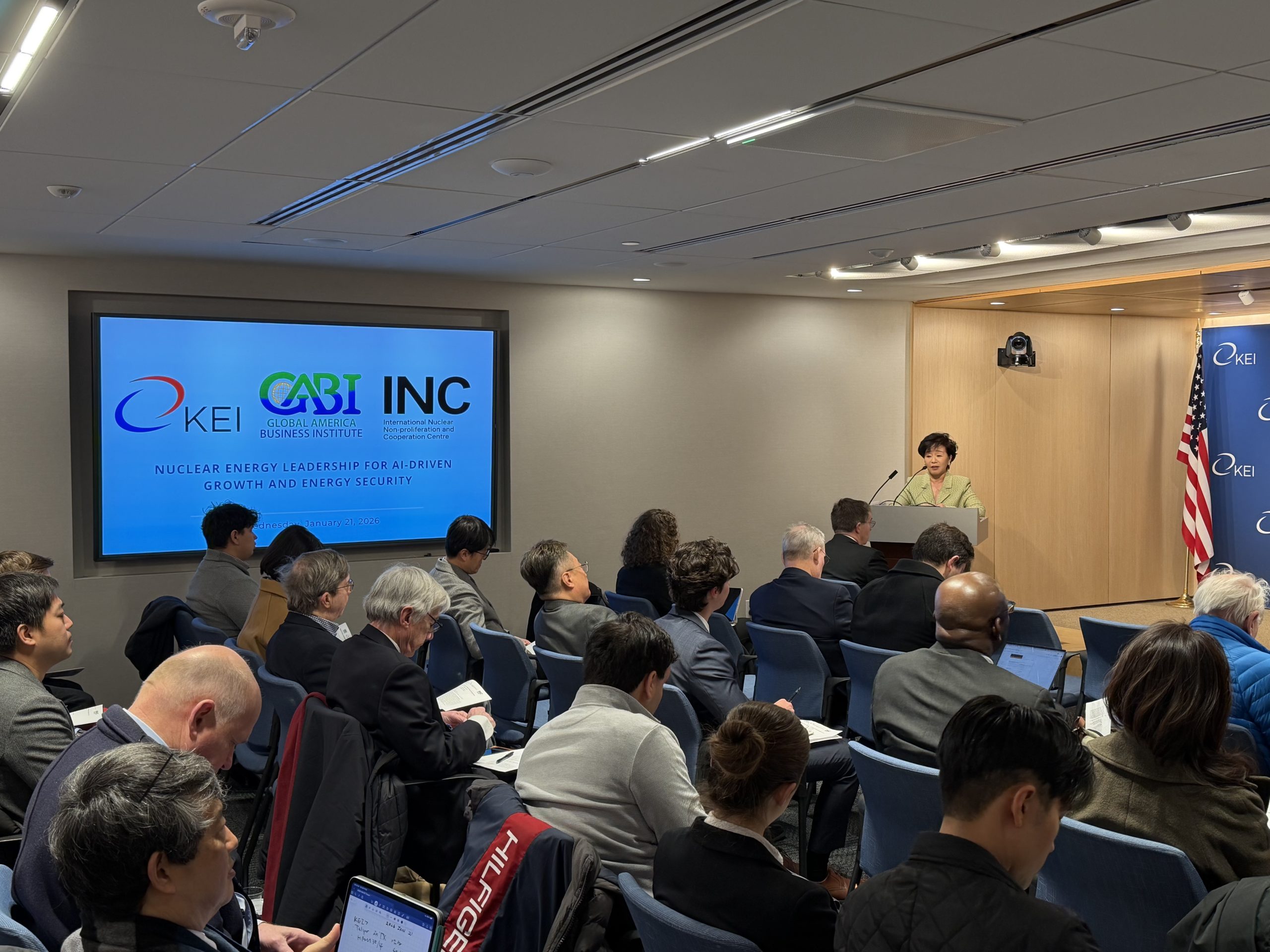
Sustaining AI-driven economic growth will require a fundamental rethinking of how energy infrastructure is valued, planned, and governed. Energy systems—and nuclear power in particular—must be treated as strategic assets rather than conventional commodities, given their direct linkage to national competitiveness, technological leadership, and security. The ability to power AI reliably and affordably is increasingly becoming a defining feature of state capacity in the digital age.
Participants converged on the view that meeting AI-era electricity needs will depend not only on expanding generation capacity, but on integrating energy policy with supply-chain strategy, industrial planning, and national security considerations. This includes strengthening domestic and allied manufacturing bases, securing fuel and critical material supply chains, and ensuring that regulatory systems are capable of enabling speed and scale without compromising safety or public trust. Nuclear energy emerged as uniquely positioned to support this integrated approach, given its combination of reliability, energy density, low-carbon attributes, and strategic relevance.
Ultimately, the program underscored that a reactive or fragmented approach will be insufficient in the face of AI-driven demand growth. Instead, a proactive, coordinated, and internationally aligned strategy will be required—one that links energy deployment with economic policy, security frameworks, and allied cooperation. If pursued deliberately, such an approach can ensure that AI development proceeds on a foundation of reliable, affordable, and geopolitically secure power, reinforcing both economic prosperity and long-term strategic stability.


